3D-Animation

Interview with Regine Schippers
Regine Schippers is a lecturer in the field of digital image practice at Folkwang University of the Arts. In her teaching, she combines a practice-oriented introduction to the fundamentals of 3D animation with a strong focus on experimental, individual workflows and creative independence. In the interview, she talks about her path into teaching, her didactic approach, and her areas of expertise.

What motivated you to take on a teaching position at the Folkwang University of the Arts?

Regine Schippers gained positive teaching experience early on during her studies. Starting with software workshops, she developed a strong interest in sharing her knowledge in various contexts. Through Natascha Dell, she was eventually offered the opportunity to teach digital image practice in the Intermedial Design program (formerly Communication Design) at Folkwang.

What was your first impression of Folkwang?

When Regine arrived at Folkwang, she had just completed her master’s degree and found it fascinating to experience the university environment from the other side. Her start coincided with the period of hybrid teaching during the COVID-19 pandemic, which required some initial orientation. However, she received strong support from her colleagues. In her courses, she is repeatedly inspired by the creativity of the students.

What kind of courses/projects do you offer?

In 2021, she initially focused more intensively on digital image practice in 2D animation, but later shifted her emphasis to 3D animation, particularly 3D modeling and techniques using Blender. She aims to introduce students to hands-on work with Blender and to support them in developing their own workflows in order to build a solid foundational understanding. In her courses, students create small scenes, such as dioramas. While there is a general thematic framework, students are free to pursue their own interests and strengths. She actively engages in dialogue with them to shape the course collaboratively and enjoys providing deeper insights into various topics.

What do you aim to convey to students through the projects?

Her goal is to equip students with a versatile skill set that not only provides a solid foundation but also encourages them to experiment and develop their own workflows. In this way, she wants to offer them the best possible conditions to creatively realize their own ideas.

How do you teach your course content? Do you use specific methods?

Regine’s teaching approach is strongly practice-oriented. Each semester, she defines an overarching theme, such as 3D dioramas and their animation. Within this framework, students have a great deal of freedom and can work according to their individual levels of knowledge. It is important to her to consistently translate theory into practical tasks and to guide students step by step through the tools—starting with the interface, followed by basic exercises, and moving on to more in-depth exploration. Some students may progress more slowly, others more quickly, as long as the fundamentals are understood. She provides support and technical assistance at all times. With this approach, she aims not only to impart knowledge but also to encourage experimentation and the development of individual workflows, creating the best possible foundation for realizing students’ ideas.

Would you like to share something about your background?

Regine completed her bachelor’s degree in Communication Design in Aachen, where she focused extensively on 2D animation, short films, storytelling, and experimental animation techniques. She worked with combinations of hand-drawn keyframe animation and 3D animation. For several years, she also worked in the field of commercial storyboards and animatics, producing test films for advertising productions, market research, and pitches. In Münster, she deepened her expertise through a master’s degree in Design with a focus on Information and Communication, where the emphasis was more strongly placed on user-centered design, research, and conceptual development. Her master’s thesis consisted of a 2D animation addressing the topic of the gender data gap. Alongside this, she worked in graphic and motion design, created VFX for YouTube and television series, and built a broad portfolio in moving image and illustration.

What are your main areas of expertise?

Her professional focus lies in animation, illustration, and motion design, particularly 2D motion design using After Effects. She places strong emphasis on developing her own techniques, especially in independent work. She uses Blender as a versatile tool to support 2D projects and to create more advanced 3D animations.

What are you currently working on? What was your most recent project?

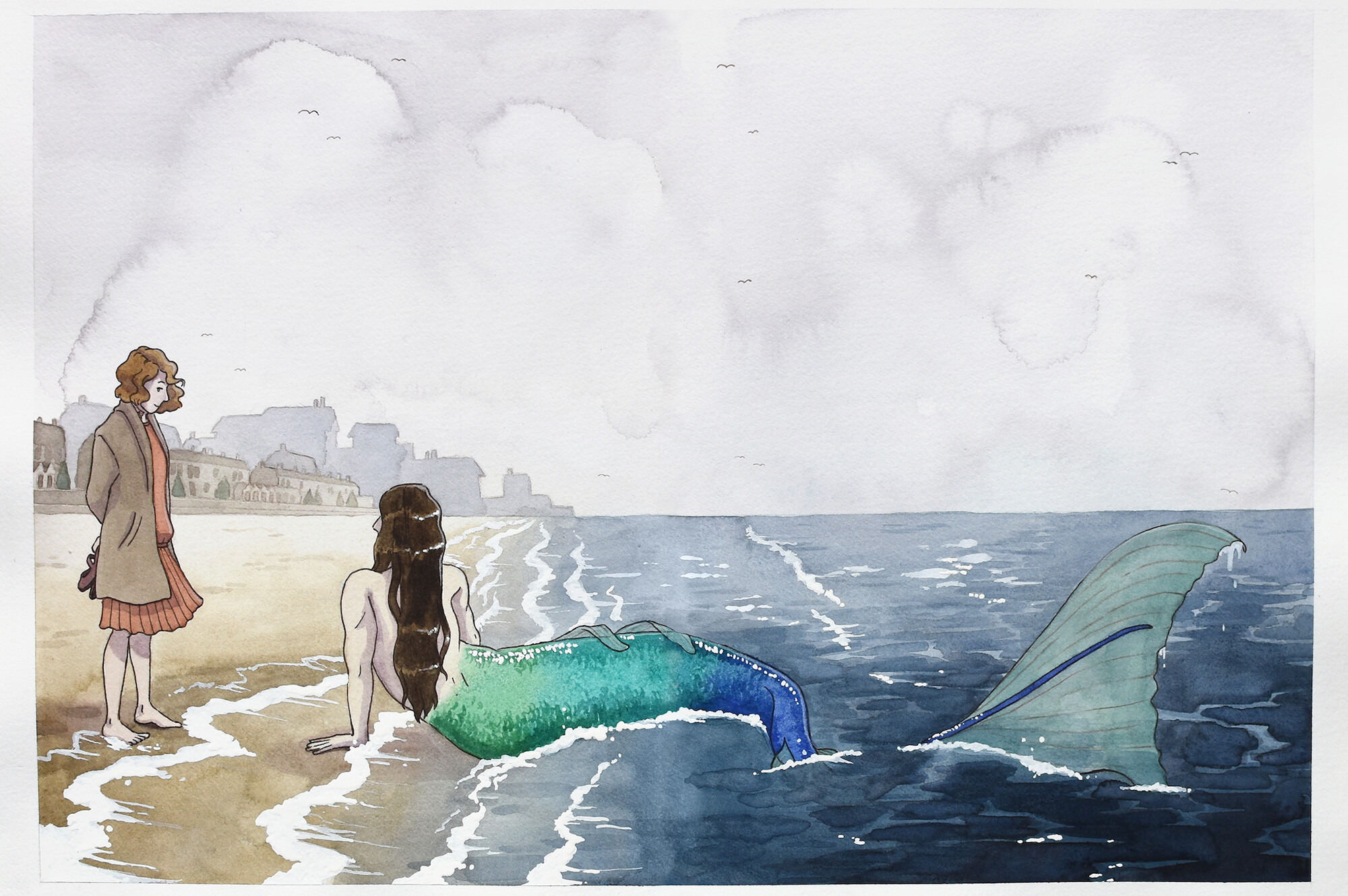
Regine is currently working on a personal project: a graphic novel that combines watercolor and mixed media techniques with digital Blender applications. The project is planned over a longer period, as she is developing it alongside other commitments. In terms of content, the graphic novel explores themes such as identity, coming of age, and self-discovery in a fantastical setting.

The interview was conducted by Sophia Stenzel.

Credits:
Text: Sophia Stenzel
Images/Animation: Regine Schippers

Edit
University of the Arts